How the layer is built
Four pieces. They compile to the qubits you already use. The host machine stays the host.
Contextures
Each contexture carries its own logic. They are co-resident on the same register. A desk is a named set of those logics, locked before the job runs.
Kenograms and morphograms
Inside a contexture, QPC stores relational pattern. The circuit holds that pattern open until readout.
Transjunctions
Transjunctions couple contextures while the job is live. The joint structure is what we measure: ICC, junction gap, ranking on the coupled arm.
One job, one readout
The decision comes from the quantum counts. Architecture claims stay on raw Sampler data. Resilience sits on the same IBM path as a diagnostic channel. Circuit schedules stay closed.
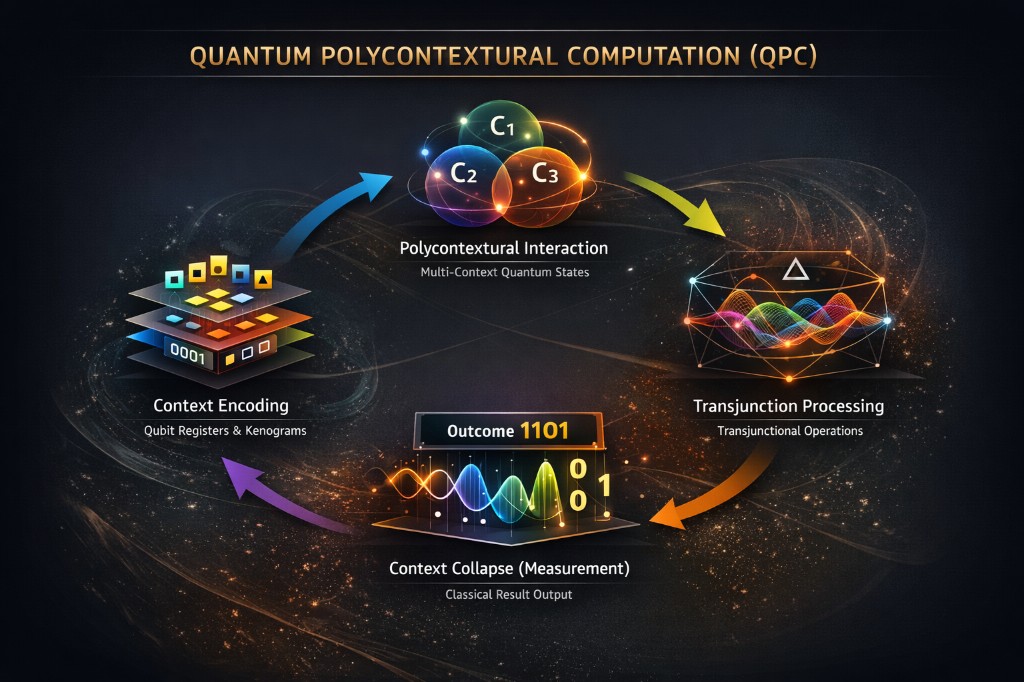
Context encoding → polycontextural interaction → transjunction → measurement
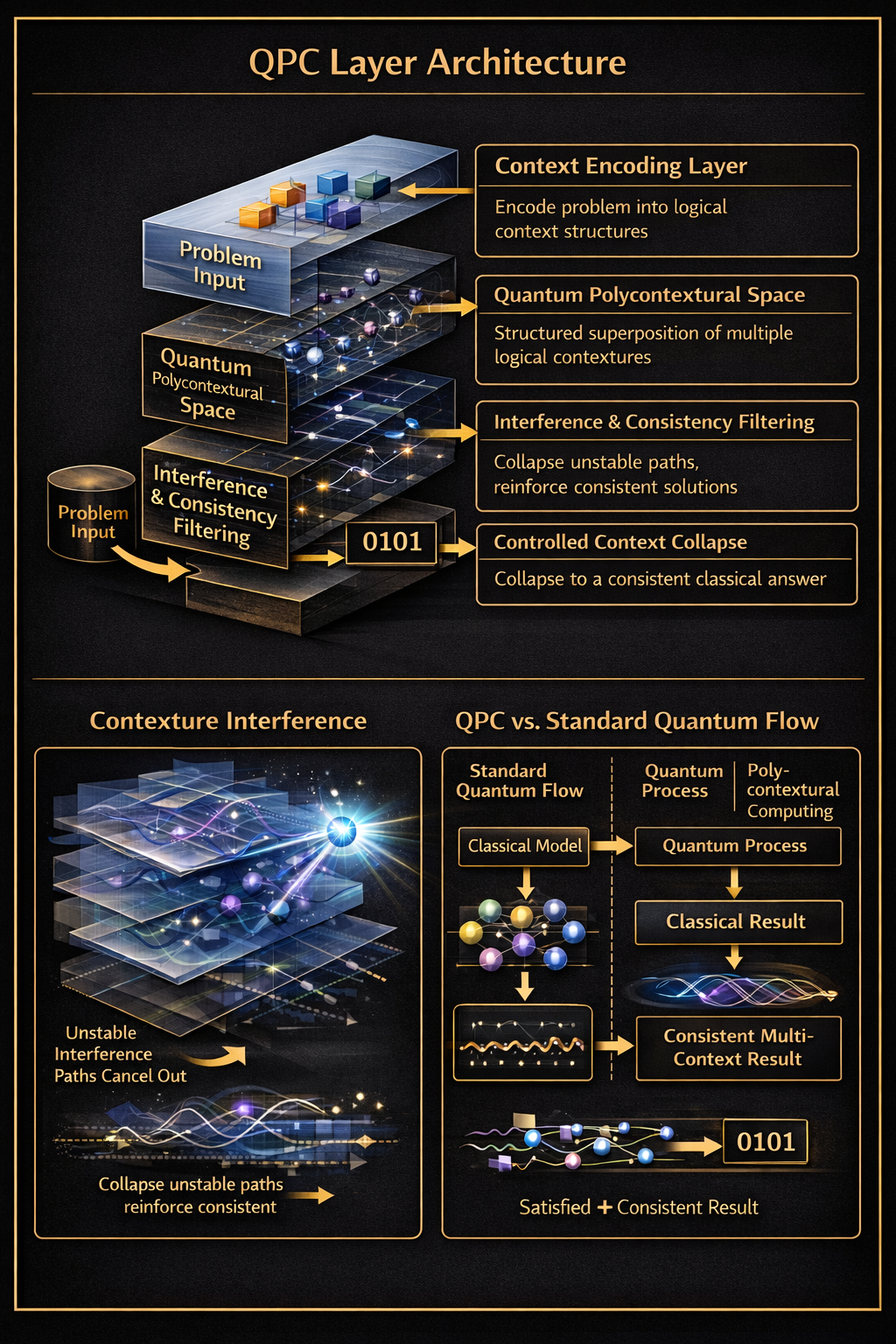
The layer on the host stack. Presentation names map onto the QPC terms below.